
No community ratings yet on FilmStash · 0 membersOne score per member · Verified member ratings
In Rhea (1982), Askevold elaborates on his interest in allusion and implication, using images that seem to be fragments of a larger narrative to suggest, rather than tell, a story. This piece consists of a series of close-up shots of numerous people, each stating a name or phrase. The shots gesture towards the type of staged reaction shot, often used in soap operas or made-for-TV movies, interrupting the linearity of the story.Read moreLess
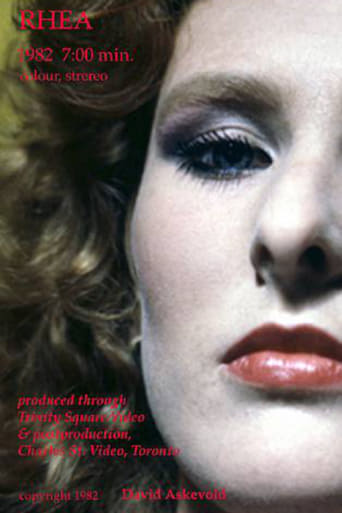
In Rhea (1982), Askevold elaborates on his interest in allusion and implication, using images that seem to be fragments of a larger narrative to suggest, rather than tell, a story. This piece consists of a series of close-up shots of numerous people, each stating a name or phrase. The shots gesture towards the type of staged reaction shot, often used in soap operas or made-for-TV movies, interrupting the linearity of the story.
The story
In Rhea (1982), Askevold elaborates on his interest in allusion and implication, using images that seem to be fragments of a larger narrative to suggest, rather than tell, a story. This piece consists of a series of close-up shots of numerous people, each stating a name or phrase. The shots gesture towards the type of staged reaction shot, often used in soap operas or made-for-TV movies, interrupting the linearity of the story.
Cast & crew
Explore the crew
- Director
- David Askevold
- Editor
- David Askevold
- Director of Photography
- David Askevold