
No community ratings yet on FilmStash · 0 membersOne score per member · Verified member ratings
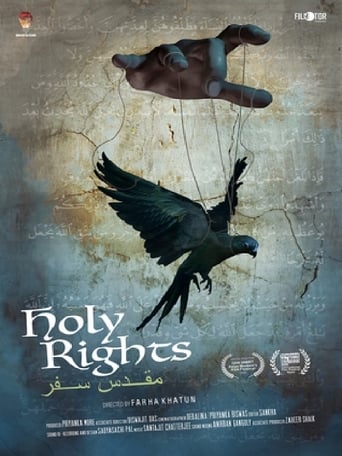
Filmed over four years, Holy Rights relates the struggles of Safia—a deeply religious Muslim woman from Bhopal—against the patriarchal mindset of the interpreters of Sharia law, which she believes denies women within her community equality and justice. Safia joins a programme that trains women as Qazis—Muslim clerics, traditionally male, who administer the law. As she passes through uncharted territory, Safia faces the tensions that accompany the act of owning her own narrative. After several other women join the programme, the film examines the arbitrary nature of triple talaq (instant divorce by saying “talaq” thrice). It also documents the fight to break free from both patronising voices within Muslim women’s communities, and outside forces that seek to appropriate their movement for political gain.Read moreLess
Filmed over four years, Holy Rights relates the struggles of Safia—a deeply religious Muslim woman from Bhopal—against the patriarchal mindset of the interpreters of Sharia law, which she believes denies women within her community equality and justice. Safia joins a programme that trains women as Qazis—Muslim clerics, traditionally male, who administer the law. As she passes through uncharted territory, Safia faces the tensions that accompany the act of owning her own narrative. After several other women join the programme, the film examines the arbitrary nature of triple talaq (instant divorce by saying “talaq” thrice). It also documents the fight to break free from both patronising voices within Muslim women’s communities, and outside forces that seek to appropriate their movement for political gain.
The story
Filmed over four years, Holy Rights relates the struggles of Safia—a deeply religious Muslim woman from Bhopal—against the patriarchal mindset of the interpreters of Sharia law, which she believes denies women within her community equality and justice. Safia joins a programme that trains women as Qazis—Muslim clerics, traditionally male, who administer the law. As she passes through uncharted territory, Safia faces the tensions that accompany the act of owning her own narrative. After several other women join the programme, the film examines the arbitrary nature of triple talaq (instant divorce by saying “talaq” thrice). It also documents the fight to break free from both patronising voices within Muslim women’s communities, and outside forces that seek to appropriate their movement for political gain.
Cast & crew
Explore the crew
- Producer
- Priyanka More
- Editor
- Farha Khatun
- Editor
- Sankhajit Biswas
- Director
- Farha Khatun