
No community ratings yet on FilmStash · 0 membersOne score per member · Verified member ratings
There is nothing more useless than an organ wrote Antonin Artaud in 1947, by the way he gave a name to a new kind of existence : the Body without Organs. The film is divided into three parts, following the division of the poem The Divine Comedy, the chronology of Dante’s trip through Hell, Purgatory and Paradise is respected. During this travel his human body is reconstructed and reorganised into a new body freed from his organism and from his organs. This new body, in touch with Beatrice, and by his ascension, becomes point of circulation of flows and intensities of all kinds.Read moreLess
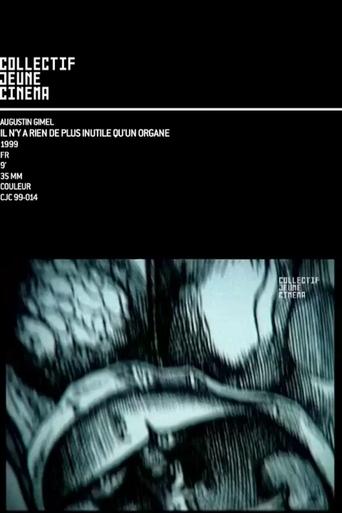
There is nothing more useless than an organ wrote Antonin Artaud in 1947, by the way he gave a name to a new kind of existence : the Body without Organs. The film is divided into three parts, following the division of the poem The Divine Comedy, the chronology of Dante’s trip through Hell, Purgatory and Paradise is respected. During this travel his human body is reconstructed and reorganised into a new body freed from his organism and from his organs. This new body, in touch with Beatrice, and by his ascension, becomes point of circulation of flows and intensities of all kinds.
The story
There is nothing more useless than an organ wrote Antonin Artaud in 1947, by the way he gave a name to a new kind of existence : the Body without Organs. The film is divided into three parts, following the division of the poem The Divine Comedy, the chronology of Dante’s trip through Hell, Purgatory and Paradise is respected. During this travel his human body is reconstructed and reorganised into a new body freed from his organism and from his organs. This new body, in touch with Beatrice, and by his ascension, becomes point of circulation of flows and intensities of all kinds.
Cast & crew
Cast information isn’t available yet.
Explore the crew
- Director
- Augustin Gimel