
No community ratings yet on FilmStash · 0 membersOne score per member · Verified member ratings
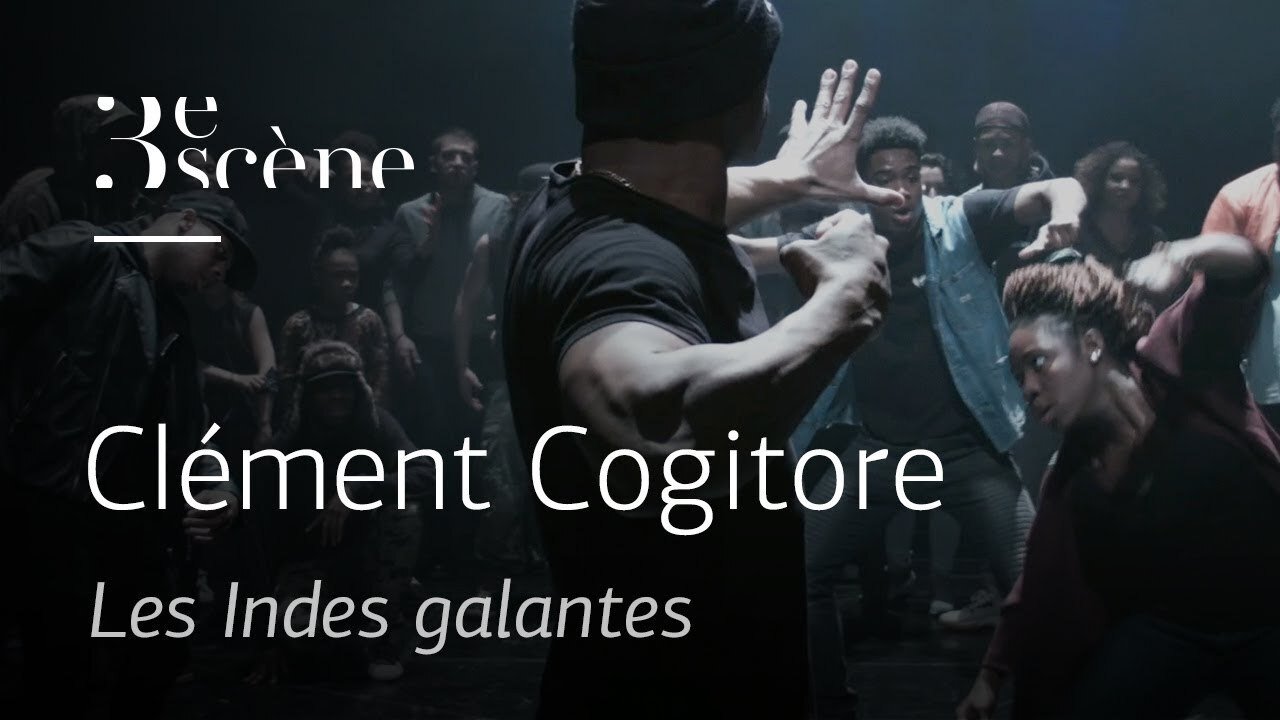
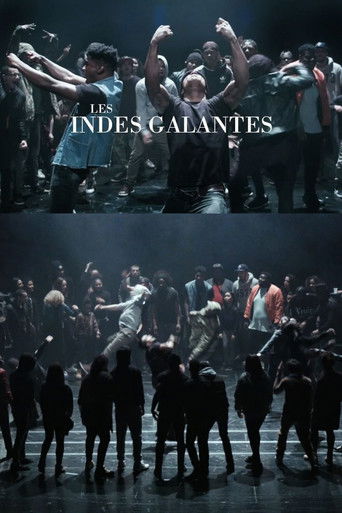
Les Indes Galantes (The amorous indies), is an opera-ballet created by Jean Philippe Rameau in 1735. He was inspired for one of the dance by tribal Indian dances of Louisiana performed by Metchigaema chiefs, in Paris in 1723. Clément Cogitore adapts a short part of the ballet by mobilizing a group of Krump dancers, an art form born in Los Angeles black ghetto in the 1990s. Its birth occurred in the aftermath of the beating up of Rodney King and the riots, as well as police repression it triggered. Amidst this coercive atmosphere, young dancers started to embody the violent tensions of the physical, social and political body. Both the tribal dance performed in Paris in 1723, and the rebelious Krump dancers of the 1990s shape a reenactment of Rameau’s original libretto, staging young people dancing on the verge of a volcano.Read moreLess
Les Indes Galantes (The amorous indies), is an opera-ballet created by Jean Philippe Rameau in 1735. He was inspired for one of the dance by tribal Indian dances of Louisiana performed by Metchigaema chiefs, in Paris in 1723. Clément Cogitore adapts a short part of the ballet by mobilizing a group of Krump dancers, an art form born in Los Angeles black ghetto in the 1990s. Its birth occurred in the aftermath of the beating up of Rodney King and the riots, as well as police repression it triggered. Amidst this coercive atmosphere, young dancers started to embody the violent tensions of the physical, social and political body. Both the tribal dance performed in Paris in 1723, and the rebelious Krump dancers of the 1990s shape a reenactment of Rameau’s original libretto, staging young people dancing on the verge of a volcano.
The story
Les Indes Galantes (The amorous indies), is an opera-ballet created by Jean Philippe Rameau in 1735. He was inspired for one of the dance by tribal Indian dances of Louisiana performed by Metchigaema chiefs, in Paris in 1723. Clément Cogitore adapts a short part of the ballet by mobilizing a group of Krump dancers, an art form born in Los Angeles black ghetto in the 1990s. Its birth occurred in the aftermath of the beating up of Rodney King and the riots, as well as police repression it triggered. Amidst this coercive atmosphere, young dancers started to embody the violent tensions of the physical, social and political body. Both the tribal dance performed in Paris in 1723, and the rebelious Krump dancers of the 1990s shape a reenactment of Rameau’s original libretto, staging young people dancing on the verge of a volcano.
Cast & crew
 Sabine DevieilheHébé / Phani / Zima
 Julie FuchsFatime / Emile
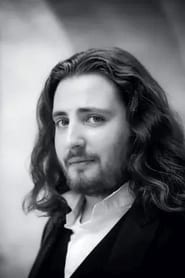 Florian SempeyBellone / Adario
 Jodie DevosAmour / Zaire
Explore the crew
- Director
- Clément Cogitore
- Original Music Composer
- Jean-Philippe Rameau
- Writer
- Louis Fuzelier