

Light Darkness and Colour
Directed by Marie Louise Lauridsen, Henrik Moetius
No community ratings yet on FilmStash · 0 membersOne score per member · Verified member ratings
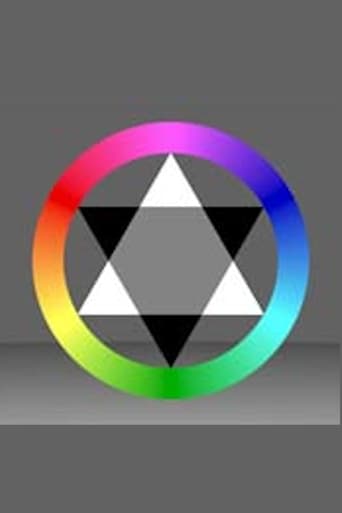
Using Goethe's Theory of Colors (Zur Farbenlehre) as point of departure, Light Darkness and Colors takes us on a fascinating journey through the universe of colors. In 1704, Sir Isaac Newton published Light and Refraction, his study of the interactions between sunlight and prisms. Newton was, as a good scientist, intent on achieving objectivity, which meant studying sunlight in isolation. He thought colors were contained solely in light, and found the spectrum he was looking for. When he reproduced this experiment, Goethe found another, hidden set of colors missed by Newton. Goethe found the hidden colors in the boundaries between light and darkness. He felt, as an artist, that one could not talk about light without including darkness. Calling it 'the light-darkness polarity', Goethe made this new scientific discovery using artistic methods in conjunction with science.Read moreLess
Using Goethe's Theory of Colors (Zur Farbenlehre) as point of departure, Light Darkness and Colors takes us on a fascinating journey through the universe of colors. In 1704, Sir Isaac Newton published Light and Refraction, his study of the interactions between sunlight and prisms. Newton was, as a good scientist, intent on achieving objectivity, which meant studying sunlight in isolation. He thought colors were contained solely in light, and found the spectrum he was looking for. When he reproduced this experiment, Goethe found another, hidden set of colors missed by Newton. Goethe found the hidden colors in the boundaries between light and darkness. He felt, as an artist, that one could not talk about light without including darkness. Calling it 'the light-darkness polarity', Goethe made this new scientific discovery using artistic methods in conjunction with science.
The story
Using Goethe's Theory of Colors (Zur Farbenlehre) as point of departure, Light Darkness and Colors takes us on a fascinating journey through the universe of colors. In 1704, Sir Isaac Newton published Light and Refraction, his study of the interactions between sunlight and prisms. Newton was, as a good scientist, intent on achieving objectivity, which meant studying sunlight in isolation. He thought colors were contained solely in light, and found the spectrum he was looking for. When he reproduced this experiment, Goethe found another, hidden set of colors missed by Newton. Goethe found the hidden colors in the boundaries between light and darkness. He felt, as an artist, that one could not talk about light without including darkness. Calling it 'the light-darkness polarity', Goethe made this new scientific discovery using artistic methods in conjunction with science.
Cast & crew
 David BatesonNarrator
Explore the crew
- Writer
- Marie Louise Lauridsen
- Director
- Marie Louise Lauridsen
- Producer
- Lise Lense-Møller
- Writer
- Henrik Boetius
- Director
- Henrik Moetius
- Writer
- Marie Louise Lefevre
- Editor
- Peter Englesson
- Director of Photography
- Manuel Sellner