
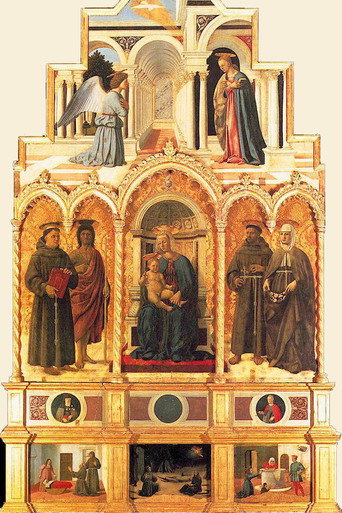
Stefano Di Giovanni dit Sassetta « Le Retable en morceaux, Polyptyque »
Directed by Alain Jaubert
No community ratings yet on FilmStash · 0 membersOne score per member · Verified member ratings
Stefano Di Giovanni, nicknamed Sassetta from the 18th century onward, painted this polyptych in Siena between 1437 and 1444 before delivering it, in accordance with his contract, to the Franciscan convent of San Sepolcro near Arezzo. The altarpiece was dismantled starting in 1578, and its various fragments were sold and dispersed. Twenty-six fragments are now scattered across ten museums in London, Berlin, Moscow, and New York… The Louvre Museum holds three of the five panels that made up the main face, as well as two small panels from the predella. Each of these fragments contains numerous clues that make it possible to reconstruct the history of the polyptych and sometimes even to determine their original placement within the whole. Graphic tools and video techniques allow the puzzle to be reassembled and different hypotheses of reconstruction to be presented—hypotheses on which specialists themselves remain divided.Read moreLess
Stefano Di Giovanni, nicknamed Sassetta from the 18th century onward, painted this polyptych in Siena between 1437 and 1444 before delivering it, in accordance with his contract, to the Franciscan convent of San Sepolcro near Arezzo. The altarpiece was dismantled starting in 1578, and its various fragments were sold and dispersed. Twenty-six fragments are now scattered across ten museums in London, Berlin, Moscow, and New York… The Louvre Museum holds three of the five panels that made up the main face, as well as two small panels from the predella. Each of these fragments contains numerous clues that make it possible to reconstruct the history of the polyptych and sometimes even to determine their original placement within the whole. Graphic tools and video techniques allow the puzzle to be reassembled and different hypotheses of reconstruction to be presented—hypotheses on which specialists themselves remain divided.
The story
Stefano Di Giovanni, nicknamed Sassetta from the 18th century onward, painted this polyptych in Siena between 1437 and 1444 before delivering it, in accordance with his contract, to the Franciscan convent of San Sepolcro near Arezzo. The altarpiece was dismantled starting in 1578, and its various fragments were sold and dispersed. Twenty-six fragments are now scattered across ten museums in London, Berlin, Moscow, and New York… The Louvre Museum holds three of the five panels that made up the main face, as well as two small panels from the predella. Each of these fragments contains numerous clues that make it possible to reconstruct the history of the polyptych and sometimes even to determine their original placement within the whole. Graphic tools and video techniques allow the puzzle to be reassembled and different hypotheses of reconstruction to be presented—hypotheses on which specialists themselves remain divided.
Cast & crew
Cast information isn’t available yet.
Explore the crew
- Director
- Alain Jaubert