
No community ratings yet on FilmStash · 0 membersOne score per member · Verified member ratings
Amaranta Cano, daughter of Carlos Cano, reconstructs, in a journey connecting Andalusia with Portugal, the events that took place on the eve of Three Kings Day in 1985: a murder, a mysterious woman, and a setting marked by the border culture between Ayamonte and Vila-Real de Santo António, with smuggling as a backdrop. The documentary not only delves into the historical and social context of the song, but also pays tribute to Portuguese fado, a musical genre that deeply fascinated Carlos Cano, as well as its most emblematic author, Amália Rodrigues. Throughout the narrative, Amaranta talks to key witnesses of the event and prominent artists such as Teresa Salgueiro, Antonio Chainho, Rozalén, Raúl Rodríguez, and Martirio, who perform their own versions of the legendary song.Read moreLess
Amaranta Cano, daughter of Carlos Cano, reconstructs, in a journey connecting Andalusia with Portugal, the events that took place on the eve of Three Kings Day in 1985: a murder, a mysterious woman, and a setting marked by the border culture between Ayamonte and Vila-Real de Santo António, with smuggling as a backdrop. The documentary not only delves into the historical and social context of the song, but also pays tribute to Portuguese fado, a musical genre that deeply fascinated Carlos Cano, as well as its most emblematic author, Amália Rodrigues. Throughout the narrative, Amaranta talks to key witnesses of the event and prominent artists such as Teresa Salgueiro, Antonio Chainho, Rozalén, Raúl Rodríguez, and Martirio, who perform their own versions of the legendary song.
The story
Amaranta Cano, daughter of Carlos Cano, reconstructs, in a journey connecting Andalusia with Portugal, the events that took place on the eve of Three Kings Day in 1985: a murder, a mysterious woman, and a setting marked by the border culture between Ayamonte and Vila-Real de Santo António, with smuggling as a backdrop. The documentary not only delves into the historical and social context of the song, but also pays tribute to Portuguese fado, a musical genre that deeply fascinated Carlos Cano, as well as its most emblematic author, Amália Rodrigues. Throughout the narrative, Amaranta talks to key witnesses of the event and prominent artists such as Teresa Salgueiro, Antonio Chainho, Rozalén, Raúl Rodríguez, and Martirio, who perform their own versions of the legendary song.
Cast & crew
 Teresa Salgueiro
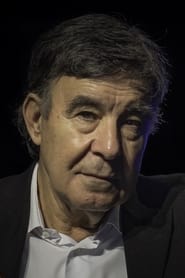 António Chainho
 Rozalén
 Martirio
Explore the crew
- Director
- Eduardo Montero
- Writer
- Eduardo Montero
- Director of Photography
- Mariano Agudo
- Editor
- Oscar Clemente