
No community ratings yet on FilmStash · 0 membersOne score per member · Verified member ratings
With a contemplative letter to a friend as its point of departure, this video essay examines the complex, paradoxical visuality of the atom bomb in China. From 1960s military documentaries to contemporary CGI-enhanced fictions, a visual trope of the communal “People’s Bomb” was orchestrated in counterpoint to the evils of imperialism and the untamed wilderness of the Gobi Desert. Amid the ecological crises of the Anthropocene, Letter to T suggests that despite the disenchantment with and the re-politicisation of the image, we might find radical sources of connection and endurance in nuclearity.Read moreLess
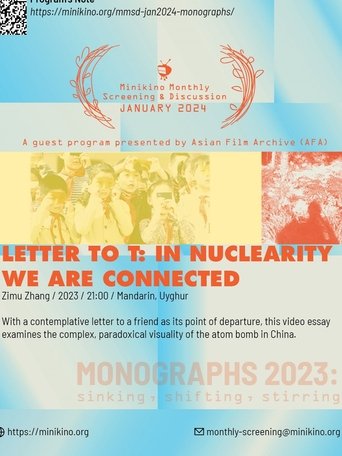
With a contemplative letter to a friend as its point of departure, this video essay examines the complex, paradoxical visuality of the atom bomb in China. From 1960s military documentaries to contemporary CGI-enhanced fictions, a visual trope of the communal “People’s Bomb” was orchestrated in counterpoint to the evils of imperialism and the untamed wilderness of the Gobi Desert. Amid the ecological crises of the Anthropocene, Letter to T suggests that despite the disenchantment with and the re-politicisation of the image, we might find radical sources of connection and endurance in nuclearity.
The story
With a contemplative letter to a friend as its point of departure, this video essay examines the complex, paradoxical visuality of the atom bomb in China. From 1960s military documentaries to contemporary CGI-enhanced fictions, a visual trope of the communal “People’s Bomb” was orchestrated in counterpoint to the evils of imperialism and the untamed wilderness of the Gobi Desert. Amid the ecological crises of the Anthropocene, Letter to T suggests that despite the disenchantment with and the re-politicisation of the image, we might find radical sources of connection and endurance in nuclearity.
Cast & crew
Cast information isn’t available yet.
Explore the crew
- Director
- Zhang Zimu