
No community ratings yet on FilmStash · 0 membersOne score per member · Verified member ratings
(auto-translation: LA CINÉMATHÈQUE FRANÇAISE ) Using a subjective camera, set to music by Bela Bartók and text by Arthur Rimbaud, François Reichenbach offers a highly singular vision of the American megalopolis. (MIFF:) These are no ordinary travel notes brought back from America by filmmakers; they are not enthusiastic records of skyscrapers and crowds. but disturbing aspects of a hallucinatory world of concrete and metal, glaring light and haunting shadow. The film is notable for its dramatic use of colour, and music from Bela Bartok's ballet "The Miraculous Mandarin". (a-t:) F.B. confides in his memoir 'Le monde a encore un visage' (1981): "When I went to New York for the first time, I'd brought along a Bell & Howell 16mm camera whose instructions I hadn't read. I didn't know how to use the film, and inadvertently loaded some rolls that had already been printed, which resulted in these strange superimposed images. A well-known process that I had reinvented by accident".Read moreLess
(auto-translation: LA CINÉMATHÈQUE FRANÇAISE ) Using a subjective camera, set to music by Bela Bartók and text by Arthur Rimbaud, François Reichenbach offers a highly singular vision of the American megalopolis. (MIFF:) These are no ordinary travel notes brought back from America by filmmakers; they are not enthusiastic records of skyscrapers and crowds. but disturbing aspects of a hallucinatory world of concrete and metal, glaring light and haunting shadow. The film is notable for its dramatic use of colour, and music from Bela Bartok's ballet "The Miraculous Mandarin". (a-t:) F.B. confides in his memoir 'Le monde a encore un visage' (1981): "When I went to New York for the first time, I'd brought along a Bell & Howell 16mm camera whose instructions I hadn't read. I didn't know how to use the film, and inadvertently loaded some rolls that had already been printed, which resulted in these strange superimposed images. A well-known process that I had reinvented by accident".
The story
(auto-translation: LA CINÉMATHÈQUE FRANÇAISE ) Using a subjective camera, set to music by Bela Bartók and text by Arthur Rimbaud, François Reichenbach offers a highly singular vision of the American megalopolis. (MIFF:) These are no ordinary travel notes brought back from America by filmmakers; they are not enthusiastic records of skyscrapers and crowds. but disturbing aspects of a hallucinatory world of concrete and metal, glaring light and haunting shadow. The film is notable for its dramatic use of colour, and music from Bela Bartok's ballet "The Miraculous Mandarin". (a-t:) F.B. confides in his memoir 'Le monde a encore un visage' (1981): "When I went to New York for the first time, I'd brought along a Bell & Howell 16mm camera whose instructions I hadn't read. I didn't know how to use the film, and inadvertently loaded some rolls that had already been printed, which resulted in these strange superimposed images. A well-known process that I had reinvented by accident".
Cast & crew
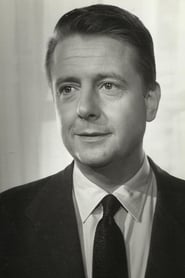 Jean DesaillySelf - Narrator (voice)
Explore the crew
- Original Music Composer
- Béla Bartók
- Editor
- Renée Lichtig
- Writer
- François Reichenbach
- Director
- François Reichenbach
- Writer
- Jacques Doniol-Valcroze
- Director of Photography
- François Reichenbach