
No community ratings yet on FilmStash · 0 membersOne score per member · Verified member ratings
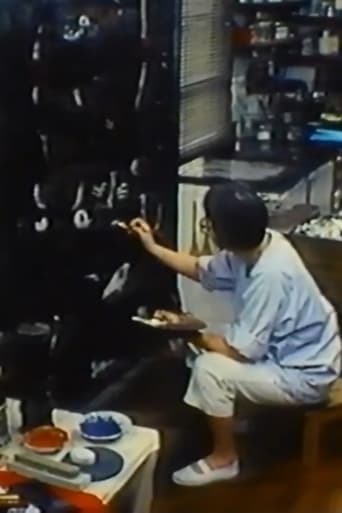
Having spent her childhood in Dalian and Harbin in the former state of Manchukuo, Taeko Tomiyama carried within her the conviction: “As an Asian, as a woman, I will begin from the margins of beauty.” Noriaki Tsuchimoto, on the other hand, directed numerous films related to Minamata disease. He confronted the suffering of pollution victims head-on, continuing to convey the harshness of life with unflinching clarity. In an interview, Tsuchimoto once remarked: “Within Tomiyama’s narrative world lies something that could be called her eros, her utopia, her aesthetics of liberation. Why does she persist in creating such dark lithographs on the themes of Chikuho and Korea? And how is it that, while doing so, she can also simultaneously depict a world of such beauty?” This film not only reveals the allure of the lithographs themselves, but also centers on the dialogue between Tsuchimoto and Tomiyama. It is a portrait of two comrades, earnestly pursuing the meaning of artistic expression.Read moreLess
Having spent her childhood in Dalian and Harbin in the former state of Manchukuo, Taeko Tomiyama carried within her the conviction: “As an Asian, as a woman, I will begin from the margins of beauty.” Noriaki Tsuchimoto, on the other hand, directed numerous films related to Minamata disease. He confronted the suffering of pollution victims head-on, continuing to convey the harshness of life with unflinching clarity. In an interview, Tsuchimoto once remarked: “Within Tomiyama’s narrative world lies something that could be called her eros, her utopia, her aesthetics of liberation. Why does she persist in creating such dark lithographs on the themes of Chikuho and Korea? And how is it that, while doing so, she can also simultaneously depict a world of such beauty?” This film not only reveals the allure of the lithographs themselves, but also centers on the dialogue between Tsuchimoto and Tomiyama. It is a portrait of two comrades, earnestly pursuing the meaning of artistic expression.
The story
Having spent her childhood in Dalian and Harbin in the former state of Manchukuo, Taeko Tomiyama carried within her the conviction: “As an Asian, as a woman, I will begin from the margins of beauty.” Noriaki Tsuchimoto, on the other hand, directed numerous films related to Minamata disease. He confronted the suffering of pollution victims head-on, continuing to convey the harshness of life with unflinching clarity. In an interview, Tsuchimoto once remarked: “Within Tomiyama’s narrative world lies something that could be called her eros, her utopia, her aesthetics of liberation. Why does she persist in creating such dark lithographs on the themes of Chikuho and Korea? And how is it that, while doing so, she can also simultaneously depict a world of such beauty?” This film not only reveals the allure of the lithographs themselves, but also centers on the dialogue between Tsuchimoto and Tomiyama. It is a portrait of two comrades, earnestly pursuing the meaning of artistic expression.
Cast & crew
 Reisen RiNarrator (voice)
Explore the crew
- Director
- Noriaki Tsuchimoto
- Director of Photography
- Yoshio Shimizu